Selling a software product
- Hiring for roles your product replaces or supports
- A funding round, which resets budget and priorities
- A competitor's tool showing in their stack
- New leadership in the function you sell into
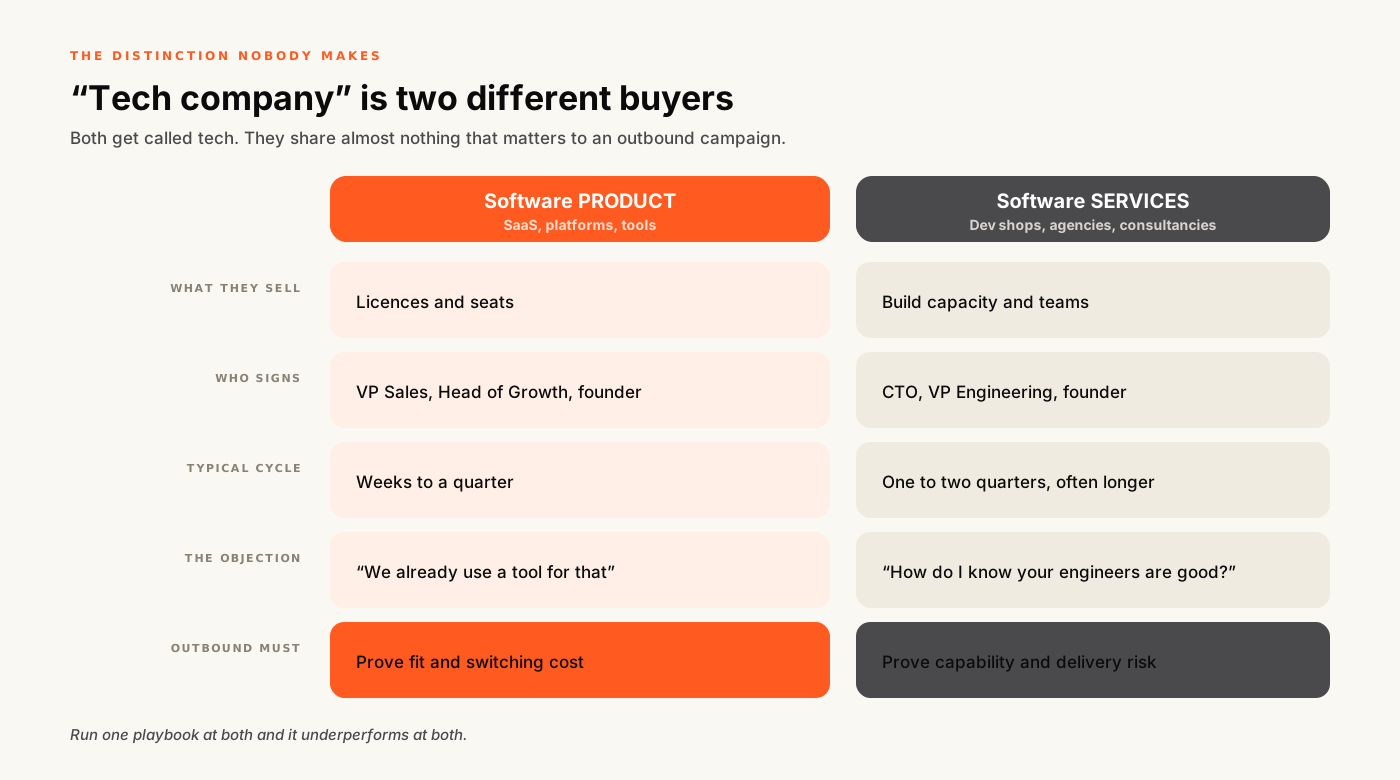
Except “tech company” is two businesses wearing one label. Software products and software services sell to different people, on different cycles, against different objections. Here is how each one actually works.
Short answer
If you sell a software product, you are reaching growth and sales leaders and proving fit. If you sell software services, you are reaching CTOs and proving capability over one to two quarters. Same channel, almost nothing else in common.
Nearly every “lead generation for tech companies” page treats these as one audience. They are not, and the differences are the ones that decide whether a campaign works. Lead generation in the tech industry splits cleanly along this line, and lead generation for software companies means something different depending on which side of it you sit.
WeeGrow’s founder, Asfand, has 8+ years in B2B sales, most recently as Head of Corporate Sales at InvoZone, a software development company. That is not adjacent experience. It is this exact motion: reaching technical buyers, getting past “how do I know your engineers are good”, and carrying deals across cycles that outlast a quarter.
It is also why this page separates products from services in the first place. Most agencies have never had to sell either one, so they write about both as though they were the same job. More on the background on the about page.
Title-only targeting is why most tech outbound fails. A CTO is not in market because they are a CTO. They are in market because something changed.
| Channel | Software product | Software services |
|---|---|---|
| Strong. Growth and sales leaders are active and reachable by title. | Strong for the first touch. CTOs read and rarely reply, so treat it as warming rather than closing. | |
| Cold email | Strong. Works well once LinkedIn has made the name familiar. | Strong, and usually where the real conversation happens. Technical buyers prefer async. |
| Calling | Useful on warm signals. | Useful late. Rarely the opener with an engineering audience. |
| Referrals | Helpful. | Dominant. Most dev shops get most work this way, which is exactly why outbound feels unnatural and why so few do it well. |
We run this as LinkedIn first with cold email and calling as follow-through. The full mechanics are on the LinkedIn outreach agency page, the stage-by-stage numbers are in the funnel breakdown, and what it costs is on the B2B lead generation cost page.
It is outbound aimed at technology businesses, but the term hides two very different jobs. Selling to a software product company means reaching growth and sales leaders and proving fit against a tool they may already use. Selling for a software services company, such as a development shop or consultancy, means reaching CTOs and VPs of Engineering and proving capability and delivery risk over a much longer cycle. Running one playbook at both underperforms at both.
A free audit of your outbound, from someone with 8+ years in B2B sales, most recently selling software services to the buyers you are trying to reach.
Thirty minutes. You keep the targeting and messaging notes either way.